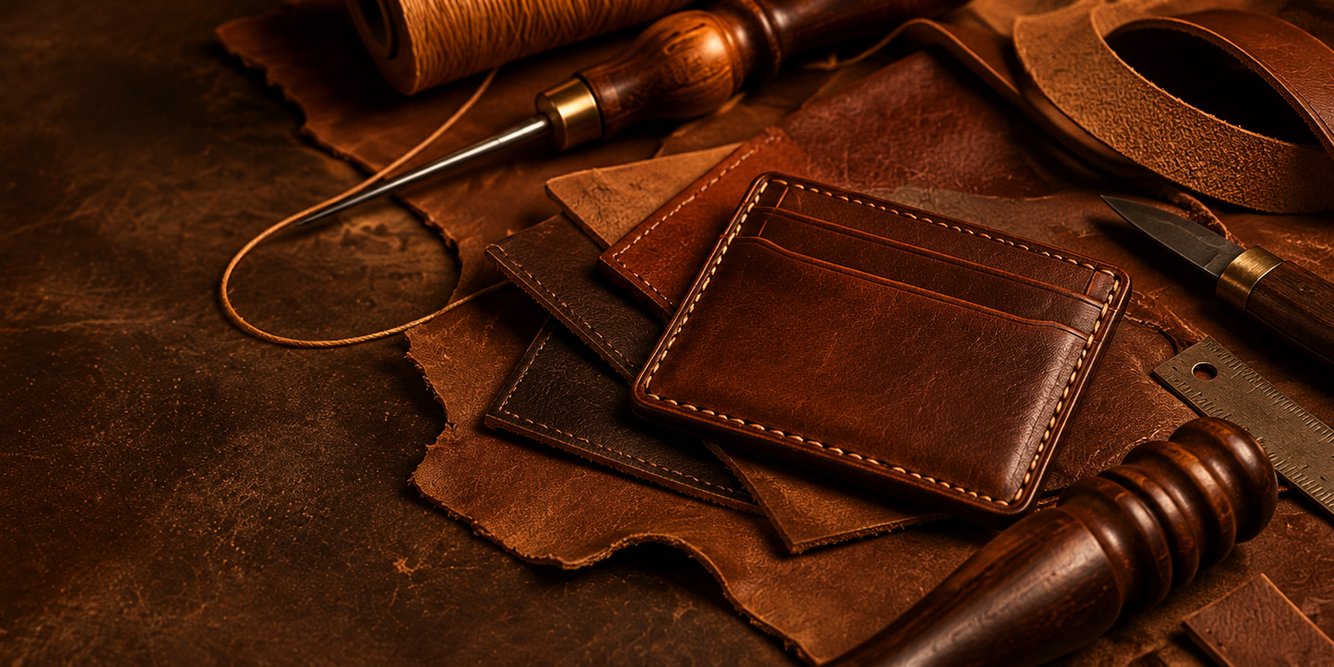
Made to outlast the things around it.
Most things made today can't survive a few months, let alone years. Vegetable-tanned leather can, and it gains character while it does. That is why we work with it, and nothing else.
Why we started with leather
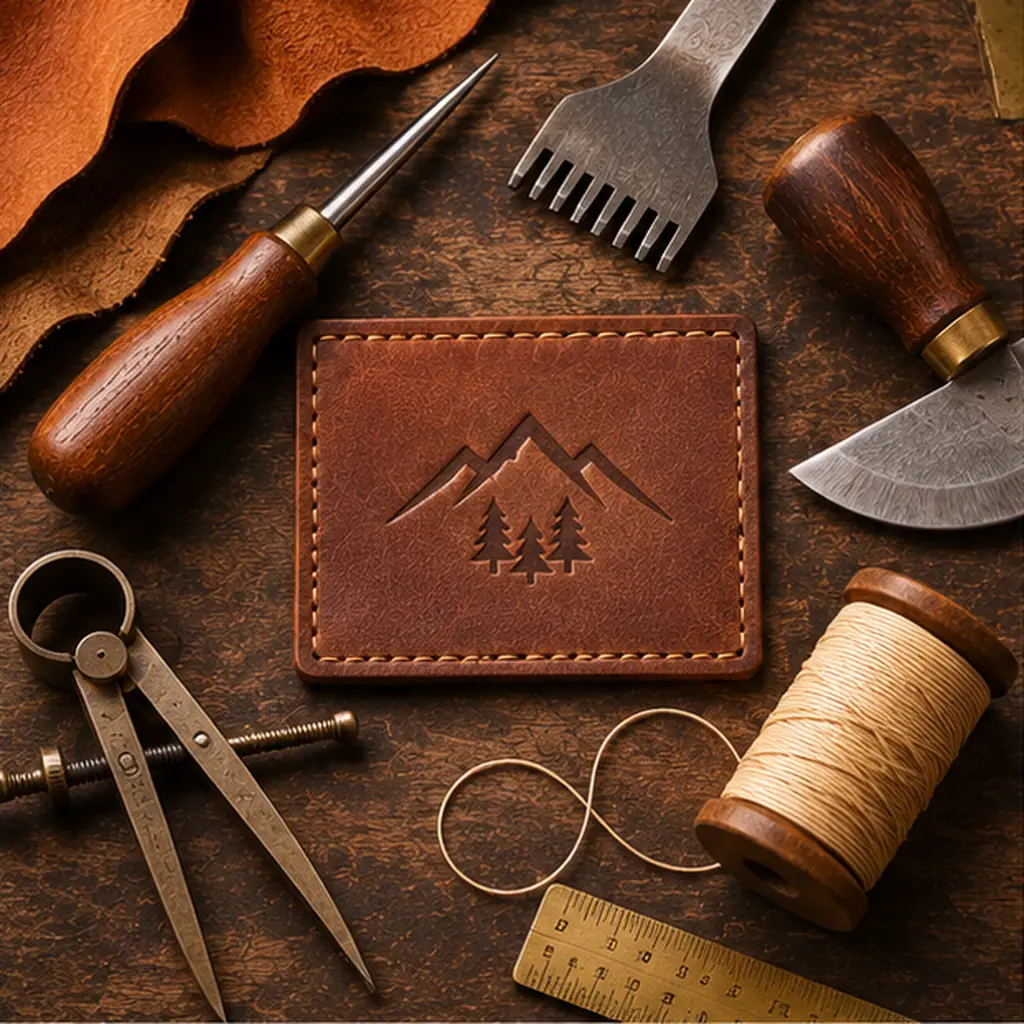
The workshop began with a question: what can you make today that will still be good in twenty years? Most materials fail that test. Plastics crack, fabrics fray, coatings peel. Full-grain leather passes it. It is dense, fibrous and strong, it takes stitching and hard use without complaint, and it has carried saddles, boots and tool rolls for as long as people have needed things that hold up.
We build with leather because nothing else we have found combines that strength with the way it ages.
Strength. Character. Endurance.
Stronger than the alternatives.
Full-grain vegetable-tanned leather is dense enough to hold its shape, resist tearing and take a stitch that will not pull through. Synthetics and thin fabrics are not in the same conversation.
Better with age, not worse.
Sun, hands and weather do not wear this leather out. They darken it, polish its edges and leave a record of where it has been. It gains character where other materials just lose their finish.
Made for years, not months.
Most things made today are not expected to survive a season. Ours are made to be carried, rained on and used for years, and to be worth repairing rather than replacing when the time comes.
Why vegetable-tanned
Most leather made today is chrome-tanned with chromium salts. It is fast, soft and inexpensive, and it stays the way it left the factory until it wears out. Vegetable tanning uses tannins from tree bark and takes weeks instead of a day. The result is a firmer, stronger leather that holds a crisp engraving, burnishes to a glassy edge, and darkens into a patina the longer you carry it.
It costs more and takes longer. It’s the only leather we use.
Read: veg-tan vs. chrome-tan →Living with leather.
Will it really last?
Yes. Full-grain vegetable-tanned leather is the same material saddles and work boots are made from. With ordinary use it holds its shape and its stitching for years, and it can be re-dyed, re-burnished or re-stitched if it ever needs it.
What happens to it as it ages?
It darkens. Sunlight and the oils in your hands turn the leather a deeper, warmer brown over the first few months, and the edges polish with handling. Scuffs blend into that patina instead of standing out. Nothing we make is meant to look new forever; it is meant to look yours.
How do I care for it?
Mostly, use it. If it gets wet, let it dry at room temperature away from heat. Once or twice a year, a light coat of a neutral leather conditioner keeps it supple. That is all it needs.
Why not a cheaper material?
Because cheap materials are cheap for a reason. Synthetics crack and peel, thin fabrics fray, and chrome-tanned leather is soft and quick but does not hold an edge or an engraving the way vegetable-tanned leather does. We would rather make fewer things that hold up.
Carry something that lasts.
Every piece starts as full-grain, vegetable-tanned leather, cut and finished by hand in the Ozarks. Pick the one that goes on your hat, your pack or your keys.